This year, it has been pretty hot. So tropical plants are in fashion now among gardeners in temperate climates, and if there is one plant that everyone can agree on about growing, it is the giant alocasia or elephant ears plant. But are we a bit mad to grow a large 6 foot tropical monster plant in a place that gets snow? Not at all, but we’ll explain how to in this easy giant alocasia growing guide.
When mature, these plants have some of the biggest leaves in the world. And they definitely give off that tropical green vibe, thus making your home instantly look and feel – Tropical. The best part is you don’t need a greenhouse for this; just a big pot and some nerve. So are you ready to begin learning how to grow these tropical giants right in the comfort of home?
Meet the Giant Elephant Ears
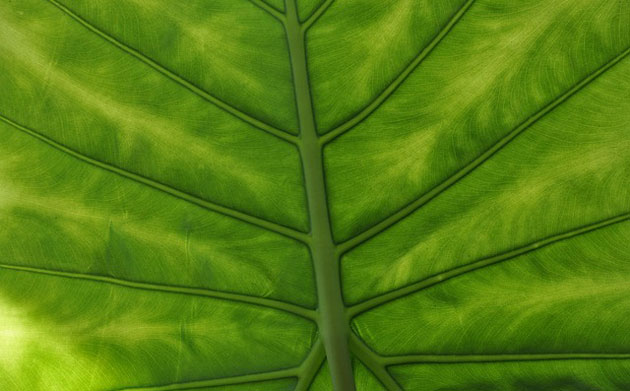
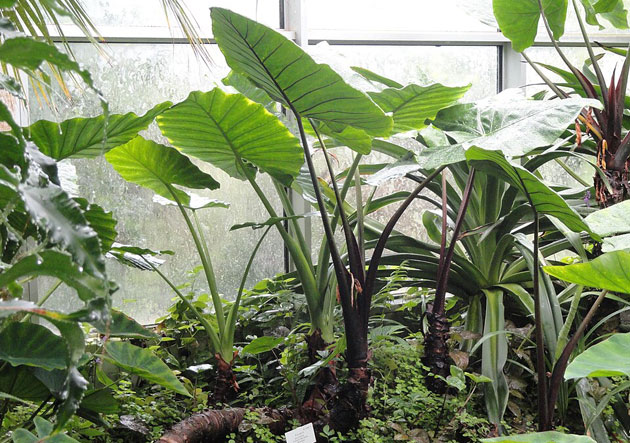
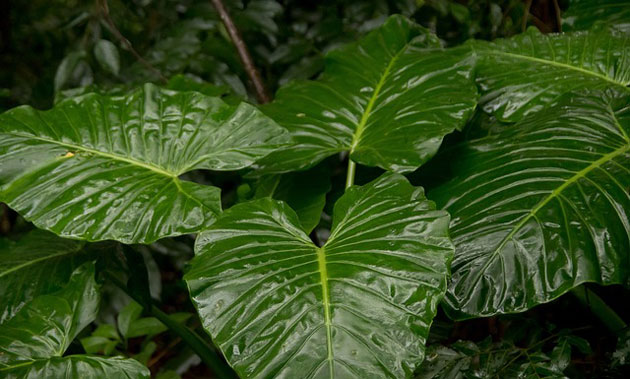
Alocasia is a genus of flowering plants from the family Araceae, native to tropical Asia, and these plants are called aroids. They flower through a hooded inflorescence that looks like a Peace Lily. When we talk about “giant” alocasia here, we define anything as “giant” when it can grow over a meter in height with large, broad leaves. Alocasia is commonly confused with colocasia, its close relative and often called “Taro”, when in fact the truth is; alocasia is poisonous and inedible, while colocasia is edible.
While there are many alocasia species, but in this article we will focus on the big green ones that can be grown in temperate climates without a greenhouse, of which some of the popular ones include Alocasia macrorrhizos/macrorrhiza, A. odora, and A. gageana. Since their native tropical growing conditions are similar, most giant alocasia species will thrive under the same conditions as long as you can recreate it.
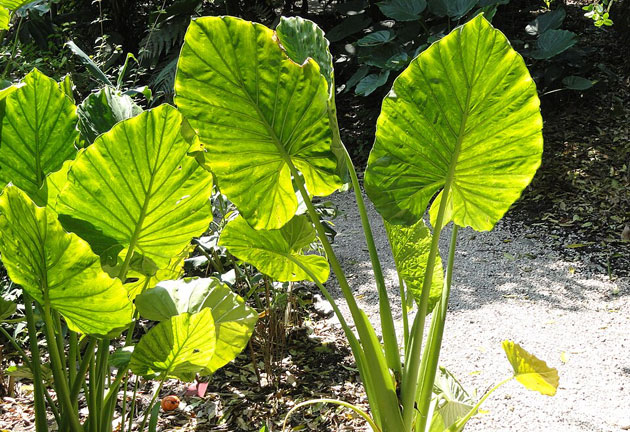
So although their leaf color may vary a little between different species, all of them produce enormous leaves and are relatively easy to grow, so don’t worry about any confusing scientific names given by the nursery. Only the biggest alocasia by far, the Borneo Giant, or Alocasia robusta, requires a greenhouse to survive in a temperate climate, contrary to its name.
Giant Alocasia Growing Guide: Potting & Soil
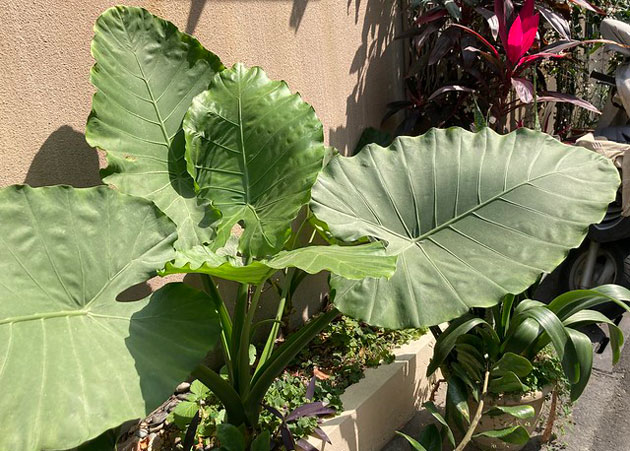
You are going to need a massive, heavy pot for growing giant alocasia, preferably terracotta pots. Their giant leaves act like giant wind sails in windy conditions, and will easily flip a cheap plastic pot upside down.
The soil needs to function like mulch, not mud, so it’s highly recommended to mix potting soil with massive amounts of orchid bark and perlite. If your soil looks like heavy thick clay, you’re going to rot the root bulb within a week.
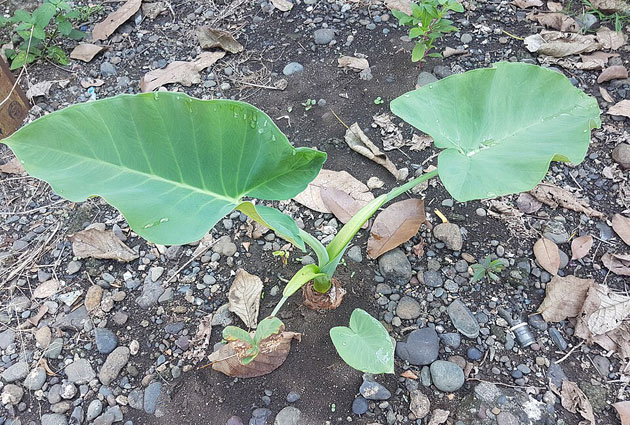
While it’s true that in the wild, giant alocasia grows near damp tropical cave entrances, the soil they grow on has constant water movement and the fallen leaves, rich organic debris, loose wood fragments, and stone pebbles all act like mulch, allowing rainwater to pass through the soil while leaving vital air pockets around the roots.
You’ll never find alocasia growing in swamps. A proven recipe for soil that is fit for growing alocasia is 40% chunky orchid bark, 30% perlite/pumice, 20% coco coir or peat moss, and 10% worm castings. The orchid bark replicates the coarse woody debris of the forest floor, the perlite/pumice ensures rapid drainage, the coco coir or peat moss helps retain some moisture without drowning the roots, and the worm castings provide organic nutrients typically found in leaf litter.
Make sure your growing pot has prominent drainage holes, and you might want to consider using a wide and deep pebble tray at the base filled with 3-5 cm deep of pebbles. Any water that drains out onto the pebble tray will evaporate, creating humid conditions right around the alocasia foliage. You can setup the whole plant with its pot and tray on top of a planter caddy with wheels, so you can move the entire plant around.
Giant Alocasia Growing Guide: Faster Growth
In the tropics, these plants have all year round to grow. In a temperate region, you only have about 100 days of real heat. How do you force explosive growth? Here’s what you need to provide.
Light
Provide them with bright morning sun. But not the harsh, hot afternoon sun of 2pm or their leaves will bleach white. In the wild, alocasia thrives in partial shade under the rainforest canopy. Bright, indirect sunlight coupled with afternoon shade will do for them. Indoors, place it near a bright east- or west-facing window or a few feet back from a sunny south-facing window where the light is softened by a curtain. Outdoors, place it under a tree or somewhere shielded from the afternoon sun.
Water
Keep the soil moist, but not wet. Water the soil so that it’s thoroughly soaked, and then allow the top 2-3 inches to dry out totally before watering again. Always test the soil moisture with your finger before you water. If it feels damp, wait a few more days. Don’t use excessively cold water to water your alocasia; lukewarm or room-temperature water will do just fine.
Food
These big plants have a big appetite. So feed them a liquid fertilizer diluted to half strength every 2-4 weeks. A balanced fertilizer of 10-10-10 NPK ratio is adequate, but then you should dilute it even more in half by adding double the amount of water. This will prevent root burn. Always feed your plant only when the soil is moist enough from a recent watering. If you apply fertilizer to dry soil, the roots will get scorched. The main rule for feeding is, only feed during spring and summer, and reduce it during autumn, to completely halt during winter.
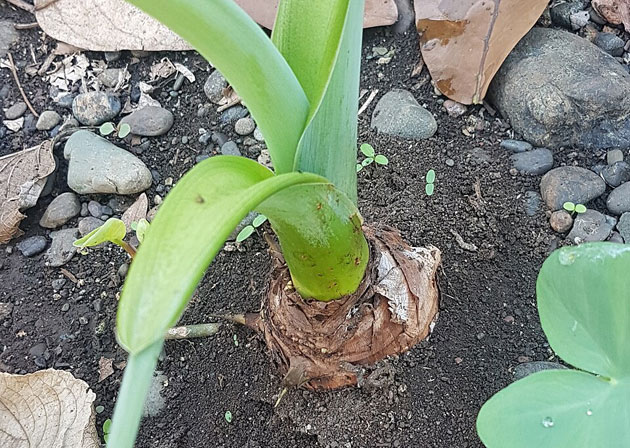
A simple sign if your alocasia is underfed is to look for pale or yellow leaves that are smaller than they should. While overfed plants display crispy, dark brown tips and edges shortly after a feeding. There would also be crusty white salt buildup on the soil surface.
Preparing for Winter
As autumn rolls in and temperatures drop at night towards 10°C (50°F), this is the time to be ready to move the plant to a warmer place. You basically have two options:
- Move the plant indoors: This is the safest step for most situations when you’ve grown it in a pot and you have enough indoor space and lighting. Clean the plant first by hosing it down to wash away any pests like aphids or spider mites before bringing it inside. Drag the pot to your brightest window or use a grow light and ensure the temperature is warm enough for it (18-25°C or 65-77°F). Be prepared for your plant to shed a few leaves while it adjusts.
- Let it grow dormant: This is the lazy basement gardening way. Use this method if your plant is too large to keep indoors or if you have planted it outdoors. Basically, you let the first light frost turn the leaves brown or yellow. This creates a signal to the plant to conserve its energy by transferring it to the bulb. Prune off all the leaves and stalk to about 4-6 inches (10-15 cm) above ground level. Dig out the plant carefully, making sure not to damage the underground tuber or corm. Brush away loose soil around the tuber but don’t wash it, and let it dry in a warm and shaded room for 3-7 days. Place the dried tuber into an open box and pack in some dry peat moss, perlite, or crumpled newspaper to absorb any moisture. Store the box in a dark, dry, and frost free space at between 7-13°C or 45-55°F. A basement or cupboard should suffice, and you can forget about it until April next year.
Troubleshooting Tips
Giant alocasia is generally easy to grow as they are not very fussy on requirements. However, issues may arise from time to time. We address some of the common issues below.
Crying leaves – Panic not. This is a natural process called guttation, and is caused by the plant releasing excess water through the leaves. Guttation usually happens after you water the plant, but its normal for the plant to regulate its water level. But if it “cries” for several days in a row, the soil is too wet and you should stop watering completely until things get back to normal.
Leaves turning yellow on the bottom – Mostly this is just the plant shedding old leaves to make way for new leaves and it shouldn’t be a concern. However, if multiple lower leaves are turning yellow and they are soft and limp, the plant is getting too much water. This is especially if your alocasia is having heavy guttation. Stop watering immediately for a few day until the top 5-8 cm of soil dries out.
Tiny webs on the plant – These are the work of spider mites. Isolate your affected plant from others to stop the pests from spreading. Give the plant a hosing down, and wipe the plant with mild dish soap water, then spray neem tree oil or insecticide soap to eradicate them and their eggs. Repeat this process every 4-7 days for 3 weeks to break the breeding cycle of the spider mites.