Imagine looking out your window to see the large fronds of tropical bananas swaying in the breeze on a crisp autumn morning. Think this is impossible? No, it isn’t. While it all sounds like a horticultural impossibility, growing bananas in temperate climates like the United States is totally achievable.
It’s a widespread myth that has been going on for a long time; that somehow bananas can only survive in continuous tropical heat and humidity. But by choosing specific cold tolerant varieties and mastering basic winter insulation techniques, gardeners from USDA Zone 4 all the way to Zone 9 can bring a slice of the exotic tropics all the way into their backyards. And we are going to show you how to do it in this guide on how to grow bananas in temperate climates; from selecting the right plant, preparing your soil, feeding in summer, to safeguarding your investment against winter frosts.
Choosing Your Banana Variety
When growing bananas in a temperate region, you will need to choose between two goals: Dramatic ornamental landscaping or a dedicated edible harvest.
Musa basjoo (The cold hardy king): If your primary goal is a fast growing ornamental tropical plant, then this is the banana variety for you. Also known as the Japanese Fiber Banana, its roots can survive freezing ground temperatures as low as -20°F (-29°C), although only with proper mulching. It can grow into a 15 foot tall plant within a single summer, although its fruits are strictly ornamental and inedible.
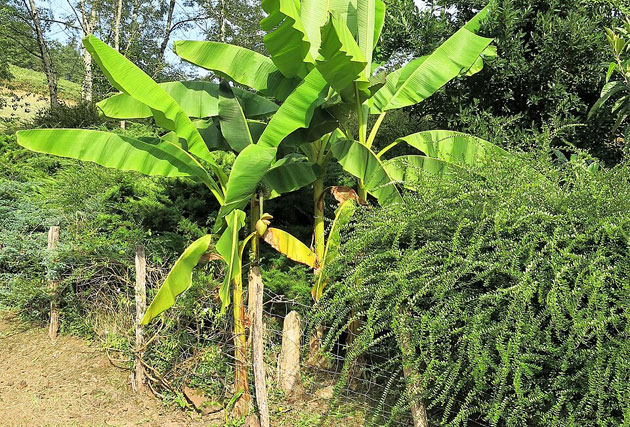
Musa rajapuri & Dwarf Orinoco: For consumption, Musa rajapuri and Dwarf Orinoco are some of the best banana cultivars for this purpose. These are rugged and compact varieties of banana, best suited for Zones 8-11, which are slightly milder temperate zones. They grow to a manageable 6-9 feet tall, and their stout trunks withstand high winds much better than taller varieties. They will yield sweet, delicious fruit if protected from heavy frost.
What about ultra-tropical bananas?
Avoid ultra-tropical varieties like Malaysia’s Lakatan banana (Musa acuminata) for outdoor planting. This gourmet, orange-fleshed banana completely stops growth when temperatures dip below 57°F (14°C) and cannot survive a single temperate frost. It also needs a minimum of 10 months of continuous heat to set fruit.
Soil and Planting
Under ideal conditions, banana plants are incredibly fast growers, but they require a precisely built foundation able to support their high metabolic needs.
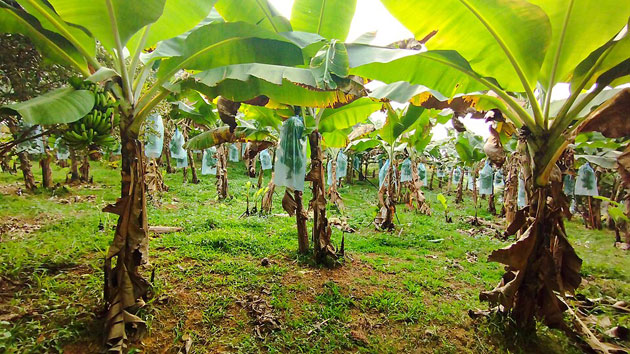
It should be noted that bananas are usually planted from the “pups”, or grown by nurseries from tissue culture, or else from rhizome cuttings. The pups are juvenile saplings that propagate from the mother tree and are separated from it and packed into polybags and sold by nurseries. These nurseries usually sell the “sword suckers” which are pups with narrow sword-like leaves while the “water suckers” with broader leaves are avoided, as the sword suckers are more robust and develop stronger root systems.
Meanwhile, the plants grown from tissue culture are those propagated by tissues from the growing tips of healthy adult banana plants in nutrient-rich gels to mass produce thousands of tiny plant clones. For obvious reasons, only well-equipped nurseries produce their bananas this way.
Those grown from rhizome (corm) cuttings are the ones with their corm dug up and only those portions with at least one healthy bud/eye are selected, because only these buds will develop new leaf sprouts.
Site Selection: Find a spot that gets 6-8 hours of uninterrupted, direct sunlight daily, while planting nearby a south-facing brick wall or sturdy privacy fence provides an ideal microclimate which limits strong winds that could damage the banana plant.
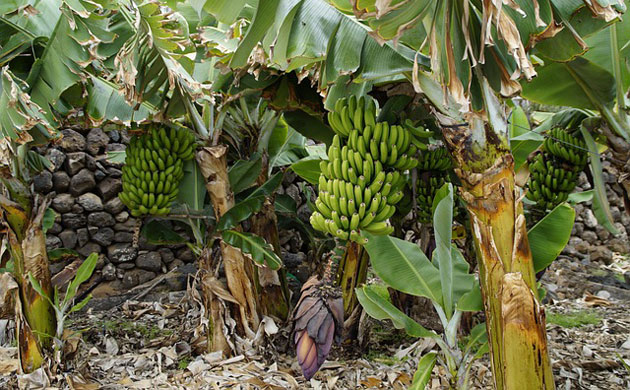
The Soil Formula: For planting, dig a hole twice as wide and deep as your plant’s root ball. Mix 50% native topsoil with 25% rich organic compost and 25% coarse sand or perlite. Bananas demand a slightly acidic soil pH between 5.5 and 6.5.
Planting and Mulching: If you are growing from a rhizome, place it level with the surrounding ground level before compacting the soil firmly around the root base. Then immediately cover the area with a 3-inch layer of organic wood mulch to retain moisture, all the while maintaining a berth of about two inches away from the main stalk (to prevent rot).
Grow Bananas in Temperate Climates: Feeding
Bananas are heavy feeders. To get those massive, lush leaves before the onset of winter, you should follow a strict, high energy feeding and watering regimen during the peak growing months.
The Watering Protocol: Bananas are composed mostly of water since they aren’t woody plants, so do provide them with a consistent supply of water. Saturate the soil deeply 2 to 3 times a week during the hot summer months. The ground should constantly feel like a tightly wrung-out sponge—consistently moist, but never pooling with stagnant water.
The Fertilizer Protocol: Think of banana plants as hungry athletes. From April through late August, apply a high-potassium, high-nitrogen fertilizer blend (such as a 10-10-30 NPK ratio) every 2 to 3 weeks. Alternatively, apply composted manure heavily to and around the root zone.
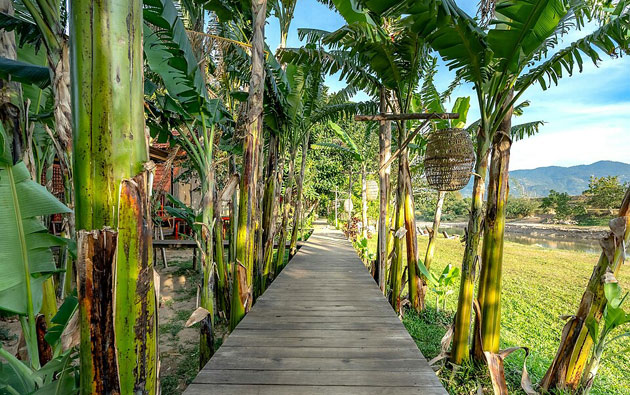
Sucker Management: Your banana plant will constantly push up underground clones called “pups”. To maximize the growth of the main stalk, practice the “One Stalk, One Successor” rule. This refers to the life cycle of the banana plant and mainly optimizes the singular main stalk. Use a sharp spade to slice away excess pups at the base so all the plant’s energy stays focused on the main stalk.
The Overwintering Strategy
The secret to growing bananas successfully in temperate regions depends on how you mitigate the approaching winter. Once late autumn arrives and the first hard frost hits, your care routine must shift based on your local climate zone.
The Mulch Cage (Zones 4-7): Frost is capable of turning the leaves of banana black. If this occurs, chop the main trunk down to a height of 2-3 feet. And then construct a simple cylinder cage out of chicken wire around the remaining stalk. Densely pack the inside of the cage with dry autumn leaves or clean straw, then wrap the entire outside structure in thick plastic or heavy burlap to protect from winter rain and ice.
The Trunk Wrap (Zones 8-9): In regions where winters are brief and mild, leave the main trunk intact without chopping it down. Pile a massive, 12-inch mound of wood mulch directly over the subterranean root zone. If a sudden, extreme cold snap is forecasted, it’s a good idea to wrap the main vertical trunk with a few layers of commercial frost cloth or plastic bubble wrap.
The Indoor Container Method: If you’re trying to grow a dwarf edible banana variety in a true freezing climate, plant it in a large 15-gallon container on wheels. Before outdoor temperatures drop below 60°F (15°C) in autumn, wheel the pot inside a sunny room, heated greenhouse, or a dark basement. Stop fertilizing entirely and water only once a month to keep the plant dormant until spring next year.
Common Pests of Banana in Temperate Climates
Although bananas are robust and generally pest-free, growing them in temperate environments will invite certain pests that are drawn to the banana plant. Vigilant monitoring of your banana plants and targeted interventions should keep the problems manageable.
The most frequent threat comes from aphids, and which may carry the destructive Banana Bunchy Top virus that stunts banana trees and fruits. Regular blasts of water and organic insecticide soap should eliminate the problem.
Two spotted spider mites may also invade; these thrive in dry conditions afforded by artificial microclimates and southward facing walls that we talked about earlier. The way to manage them is to maintain high ambient humidity as well as releasing predatory mites (Phytoseiulus persimilis) that prey on them.
Beneath the surface, temperate soils can harbor root-knot nematodes that stunt growth, an issue best managed by incorporating neem cake fertilizer into the soil and maintaining high organic matter to boost root resilience.
The general strategy for banana plant care in temperate climates is to target sap suckers, manage microclimates, and protect the root zone. Growers can keep their temperate bananas pest free and thriving just by following these simple steps.
Conclusion and FAQ
Growing your own bananas yourself is a highly rewarding gardening endeavor. Even if severe winter weather damages the upper portion of the banana plant, their incredibly robust root systems mean your banana trees will usually aggressively bounce back by early summer.
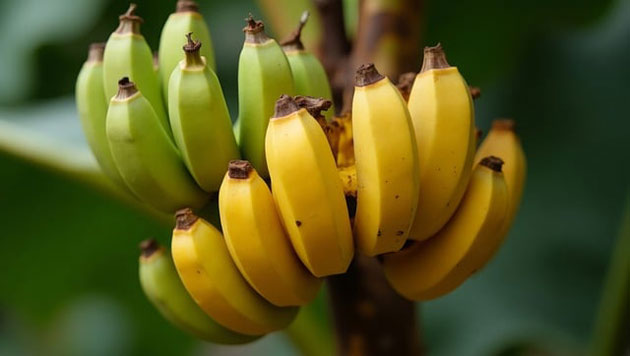
Can a banana tree grown in temperate regions be able to bear fruit?
Generally, only in Zones 8 and 9, or if the banana tree is grown in a mobile container, able to be moved indoors or outdoors. Bananas require roughly 10 to 15 continuous months of warm, frost-free weather to flower and produce a fruiting bunch to full ripeness. So although it’s possible, but growing banana fruits is just plain difficult.
What should you do when spring arrives?
Wait until late April, until after the final risk of spring frost has passed, to kick start the new growth cycle. Carefully unpack your winter insulation cage, uncover the heavy mulch away from the central banana stem, and then apply your first high-nitrogen fertilizer dose.